
Omegatine Review 2026: Is This Longevity Creatine Supplement Worth It?

Estimated reading time: 11 minutes
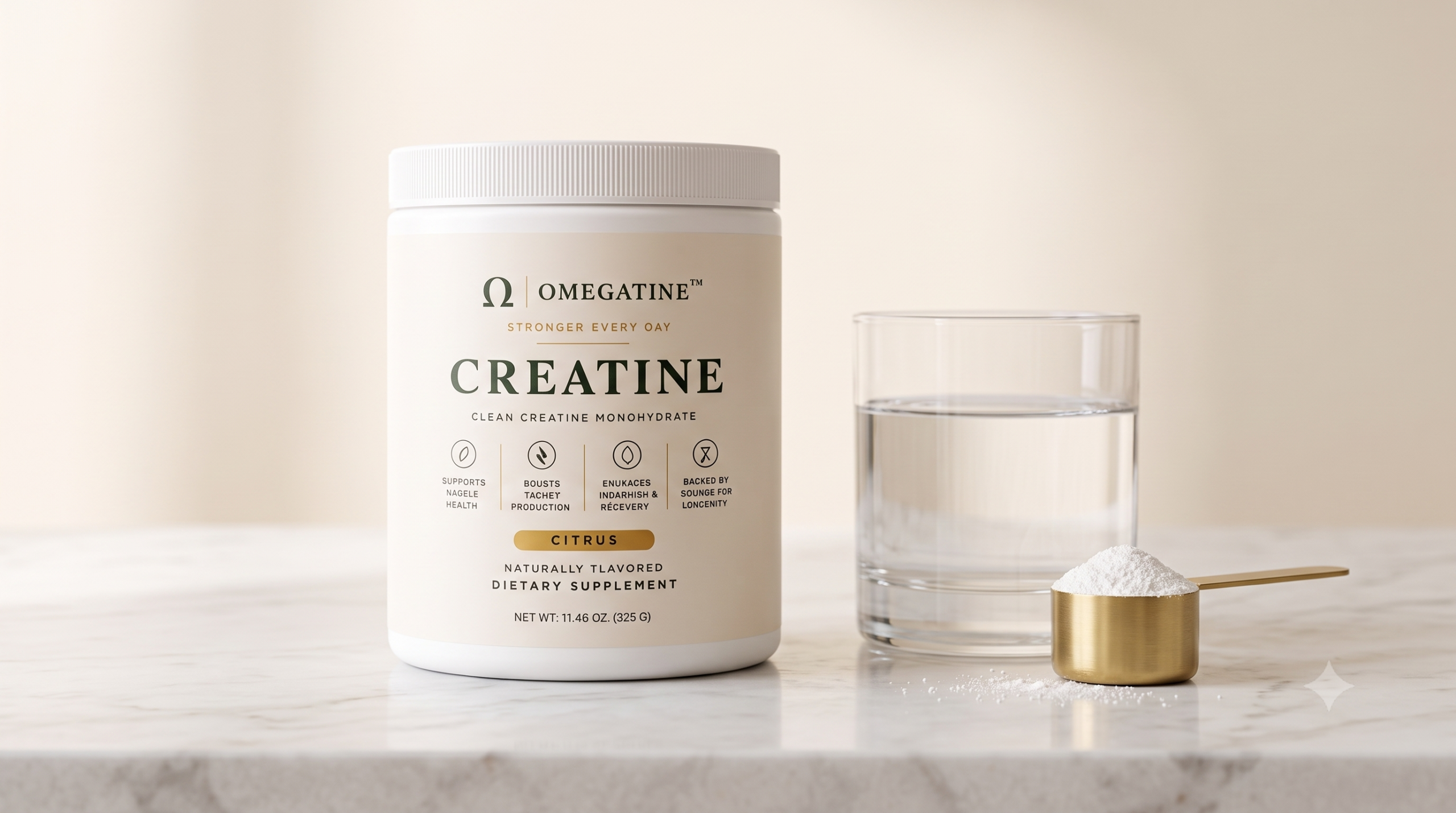
Omegatine is a daily creatine monohydrate powder marketed to adults over 40. Is it worth it? For the right buyer, probably yes. You get a plain, well-studied ingredient in a product built around healthy aging rather than gym culture. If all you want is the lowest cost per gram of creatine, though, a standard bulk monohydrate powder does the same core job for less money.
That is the short version. Below we cover the formula, what the research on creatine and aging does and does not show, the pricing tiers, how Omegatine stacks up against commodity creatine, and who should skip it. This review was last refreshed in November 2026. Product details and prices change, so confirm current terms on the brand site before you buy.
Key Takeaways
- Omegatine is micronized creatine monohydrate, the most widely studied form, packaged and positioned for adults over 40.
- Research on creatine in older adults is encouraging for strength when paired with resistance exercise. Evidence for cognition and bone health is earlier-stage and results vary.
- Omega 3 and vitamin D3 are sold separately, so you can keep your routine as simple as one product.
- Listed pricing starts at $59 for a one time purchase, with subscription options bringing the monthly cost down to as low as $39 per month.
- The main trade-off is price. Plain creatine monohydrate from other brands costs noticeably less per serving.
- Creatine is not right for everyone. Talk with a healthcare provider first, especially if you have kidney concerns or take regular medications.
What Is Omegatine?
Omegatine is a daily creatine supplement built around one core idea: adults over 40 can use the same well-studied creatine that athletes take, without the artificial flavors, stimulants, and gym-focused marketing that come with many products on the market.
The formula centers on micronized creatine monohydrate, the form used in most of the clinical research on creatine. Micronizing means the particles are finer, which helps the powder dissolve more easily in liquid. The brand presents it as a clean formula without proprietary blends, so check the current label on the product page for the full ingredient list.
Beyond the core creatine product, Omegatine also offers omega 3 fatty acids and vitamin D3 as separate supplements. This allows customers to build a complete longevity focused routine by adding the specific nutrients they need, without being forced into a one size fits all bundle. That flexibility is a smart move, since not every customer needs or wants all three.
The brand’s tagline, “Rebuild strength, protect longevity, and get stronger every year,” signals that this is not a pre workout product. Treat that wording as marketing. A supplement can support a routine, but it is not a substitute for exercise, sleep, nutrition, or medical care, and no creatine product can promise a specific outcome.
The Science Behind the Formula
The value of any supplement starts with the research behind its ingredients. Creatine monohydrate has one of the strongest evidence bases of any dietary supplement in existence.
Muscle Strength and Sarcopenia
Muscle mass tends to decline gradually with age, and the loss can speed up in later decades. This age-related decline is called sarcopenia, and it is associated with weakness, balance problems, and a higher risk of falls. Resistance exercise and adequate protein are the foundation for slowing that trend, and creatine is one of the few supplements researchers have studied as an add-on.
Meta-analyses of trials in adults aged 55 and older have generally found that creatine combined with resistance training improves strength and lean mass more than training alone, although the size of the benefit varies from study to study. Studies on creatine without exercise in older adults show weaker and less consistent results, which is why exercise is part of any realistic plan.
For adults over 40, the practical hope is simple: easier time rising from a chair, steadier balance, and less strain with everyday tasks. Those are reasonable goals to discuss with your doctor or a physical therapist, and creatine may be one small piece of the plan.
Cognitive Function
The brain is an energy-hungry organ, and creatine plays a role in how cells store and use energy. Several small studies and systematic reviews have looked at creatine and cognition in older adults, with some reporting modest benefits for memory or attention and others finding little effect.
The honest summary is that the cognitive research is promising but not settled. Larger, longer trials are needed, so it is best to treat any mental-sharpness benefit as a possible bonus rather than the reason to buy.
Bone Health and Fall Prevention
Muscle and bone health are closely linked, and stronger muscles can support better balance and mobility, which matters for fall risk. Some small studies in older women have reported improvements in functional tests such as sit to stand performance with creatine supplementation. Evidence that creatine directly improves bone density is limited, so do not rely on it for bone health. Ask your provider about calcium, vitamin D, and screening that fit your situation.
Safety Profile
Published safety reviews of creatine monohydrate generally describe it as well tolerated at typical doses of 3 to 5 grams per day in healthy adults. Mild effects such as stomach upset or temporary water weight are the most commonly mentioned. Anyone with kidney disease, or who takes medications that affect the kidneys, should speak with a healthcare provider before using creatine, because creatine can affect certain blood markers used to assess kidney function.
Omegatine vs Regular Creatine: What Are You Paying For?
This is the central question for most shoppers. The active ingredient, creatine monohydrate, is the same compound sold by many brands at a wide range of prices. Because the molecule is the same, any difference comes down to the things around it.
- Same core ingredient. A plain micronized monohydrate powder from another reputable brand supplies the same creatine at the same typical daily dose.
- Positioning and simplicity. Omegatine is built and marketed for adults over 40, with a no-frills label. Some people find that reassuring. Others see it as branding on a commodity.
- Add-on products. Omega 3 and vitamin D3 are available from the same brand. You can buy those anywhere, and whether you need them is a question for your provider and your bloodwork.
- Third party testing. If independent certification matters to you, compare labels. Look for programs such as NSF Certified for Sport or Informed Sport on any creatine you consider, Omegatine included.
- Price. This is where the gap is largest. See the pricing section below for how the tiers compare with other products.
Our take: if you value a simple, dedicated product and the cost fits your budget, Omegatine is a reasonable pick. If cost per serving is your priority and you are comfortable choosing a plain monohydrate from a brand with third party testing, a commodity powder gets you the same active ingredient for less.
Who Is Omegatine Designed For?
Based on the formula and the brand’s positioning, Omegatine is best suited for:
Adults over 40 who want to add a research-backed supplement alongside strength training and a healthy diet. This is the core audience.
People who want a clean, straightforward creatine product. If you are tired of sifting through pre workout blends loaded with caffeine, artificial sweeteners, and proprietary formulas, Omegatine offers a refreshing alternative. What you see on the label is what you get.
Health conscious adults who are not gym enthusiasts. The branding and messaging aim at staying active and independent over the long run rather than lifting heavier weights.
Customers who want to build their own routine. Because Omegatine offers omega 3s and vitamin D3 as separate add on products, you can customize your supplement stack based on your individual needs rather than paying for ingredients you may already be getting elsewhere.
Who it may not be for: Budget-focused buyers and competitive athletes who just want the cheapest creatine per gram will likely do better with a bulk monohydrate powder. People with kidney conditions, anyone who is pregnant or breastfeeding, and anyone on medications that could interact should check with a healthcare provider first. If you are still sorting out your overall health routine, our guide to the difference between health and wellness is a useful starting point, and a yearly wellness exam is a natural time to bring up supplements with your doctor.
What We Liked
Purpose built for adults over 40. The creatine market is heavily oriented toward young athletes. Omegatine speaks directly to an older audience, with no stimulants and no aggressive fitness marketing.
Micronized creatine monohydrate. This is the form most clinical research has used. Pricier alternative forms have not shown a clear advantage over it.
Clean ingredient list. No proprietary blends, no artificial sweeteners, no unnecessary fillers. You can see exactly what you are getting and in what amounts.
Flexible product ecosystem. Rather than forcing every customer into a fixed bundle, Omegatine lets you start with creatine and add omega 3s or vitamin D3 if and when you want them. That respects the customer’s autonomy and avoids the “pay for stuff you do not need” problem that plagues many combo supplements.
Subscription savings. The pricing tiers offer genuine discounts for subscribers, with the best value at the 3 month prepaid plan. This incentivizes consistency, which is exactly how creatine works best.
What Could Be Better
Premium pricing at the one time purchase level. At $59 for a single purchase, Omegatine sits well above bulk creatine powders, which commonly cost far less per serving. The subscription tiers bring the price down, but the entry point may give first time buyers pause.
Limited flavor options. At the time of our review, Omegatine did not offer the range of flavors that some larger creatine brands do. If you need a flavored powder to stay consistent, check what is currently available.
No third party certification badge displayed. Some competing creatine products carry NSF Certified for Sport or Informed Sport marks. We did not see a comparable badge on Omegatine at the time of our review, and one would add trust, especially for people comparing products side by side. Confirm the current status with the brand.
Newer brand. Omegatine has less of a track record than long-established supplement companies. Brand age says little about formula quality, but it does mean fewer independent reviews to lean on, so read recent customer feedback and policies before you commit.
Pricing Breakdown
Omegatine offers three pricing tiers:
| Plan | Price | Per Day Cost |
|---|---|---|
| One time purchase | $59 | ~$1.97/day |
| Monthly subscription | $49/mo | ~$1.63/day |
| 3 month prepaid subscription | $39/mo | ~$1.30/day |
The 3 month prepaid subscription offers the best value at $39 per month, about 34% below the one time purchase price. Subscriptions suit a supplement that is taken daily and works over weeks, but they also commit you to recurring charges, so read the cancellation and refund terms on the brand site before you sign up. Prices on this page reflect what we saw at the time of writing and may have changed.
For context, mainstream creatine monohydrate powders from well-known supplement brands typically cost a fraction of Omegatine per day. Those products are plain creatine, without the longevity positioning or add-on options Omegatine provides. Whether the premium is worth it depends on how much you value that focus and convenience. If you are weighing recurring supplement costs against other health spending, such as premiums for self-employed health insurance, it helps to write the monthly totals side by side.
How to Take It
Omegatine is designed to be taken once daily. Mix one serving with water, juice, or a smoothie. The brand recommends taking it at the same time each day to build consistency.
The dose most commonly used in research is 3 to 5 grams of creatine monohydrate per day. Some people use a loading phase of around 20 grams per day for the first week, but it is optional and can upset the stomach. A steady daily dose will build up creatine stores in the muscles over a few weeks. Follow the serving size on the product label and your provider’s advice.
Timing is flexible. Morning, afternoon, or evening can all work, and consistency matters more than the clock. Drinking enough fluid through the day is sensible while taking creatine.
Our Verdict
Bottom line: Omegatine is a solid, clearly positioned creatine monohydrate product with a premium price tag. It makes the most sense for adults over 40 who want a simple product, plan to pair it with resistance exercise, and do not mind paying extra for focus and convenience.
Buy it if you like the idea of a dedicated product for your life stage, want a clean label, and the subscription pricing fits your budget.
Skip it if you mainly care about cost per serving, you prefer a product with a visible third party testing badge, or a healthcare provider has advised you to avoid creatine.
Whichever you choose, creatine is a modest tool, not a shortcut. Regular strength training, enough protein, good sleep, and routine checkups do most of the heavy lifting. For adults over 40 interested in creatine for strength or general vitality, and who want a product built for their life stage, Omegatine is worth considering. If you are 65 or older and still sorting out your coverage, our comparison of Medicare Advantage vs Medigap may help with the bigger health-spending picture.
Rating: 9.2 / 10
Frequently Asked Questions
It can be, for the right buyer. If you want a simple creatine monohydrate made with adults over 40 in mind and the pricing fits your budget, it is a reasonable choice. If you only want the lowest price per serving, a standard monohydrate powder supplies the same active ingredient for less.
Creatine monohydrate is generally well tolerated by healthy adults at the commonly studied dose of 3 to 5 grams per day. Some people notice stomach upset or temporary water weight. Consult your healthcare provider before starting, especially if you have kidney concerns, are pregnant or breastfeeding, or take medications.
The active ingredient, creatine monohydrate, is the same. The differences are in the positioning for adults over 40, the clean label, the optional omega 3 and vitamin D3 add-ons, and the price. Compare third party testing and total cost when choosing between products.
Creatine can cause a small, temporary increase in water held in muscle tissue during the first couple of weeks, which some people notice as a pound or two on the scale. It is not fat gain. If the change concerns you, talk with your provider.
Studies on older adults show the clearest strength benefits when creatine is combined with resistance training. Some research has looked at cognition without exercise, but results are mixed. Even light regular movement such as walking or bodyweight exercises is a good place to start, and your provider can help you choose a safe routine.
Muscle creatine levels build up over a few weeks of daily use, so most research runs for weeks to months. Responses differ from person to person, and some people notice little change. Give it consistent use and set modest expectations.
Yes. Omegatine also offers omega 3 fatty acids and vitamin D3 as separate products. Each is optional, and whether you need either is worth discussing with your healthcare provider.
Based on the pricing we saw, the 3 month prepaid subscription at $39 per month is the lowest monthly cost, about 34% less than the $59 one time purchase. Because subscriptions renew, check the cancellation and refund terms first.
Plain creatine monohydrate from mainstream supplement brands generally costs much less per serving. Omegatine costs more because of its focus on adults over 40, its clean label, and its add-on products. Whether that premium is worth it depends on how much you value those things versus the lowest cost per gram.
Check the Omegatine website for the most current return and refund policy, as terms may change over time.
This article is an advertorial and not an actual news article, blog, or consumer protection update. RealComparisons is an independent, advertiser supported site. We may receive compensation from some of the brands featured on our site. The ratings, rankings, and opinions presented are based on our team’s research and subjective judgment. Please review our Terms of Use and Privacy Policy.
These statements have not been evaluated by the Food and Drug Administration. This product is not intended to diagnose, treat, cure, or prevent any disease. Always consult with a qualified healthcare professional before starting any new supplement regimen.