
Flood Insurance Explained: Coverage, Cost & Waiting Periods

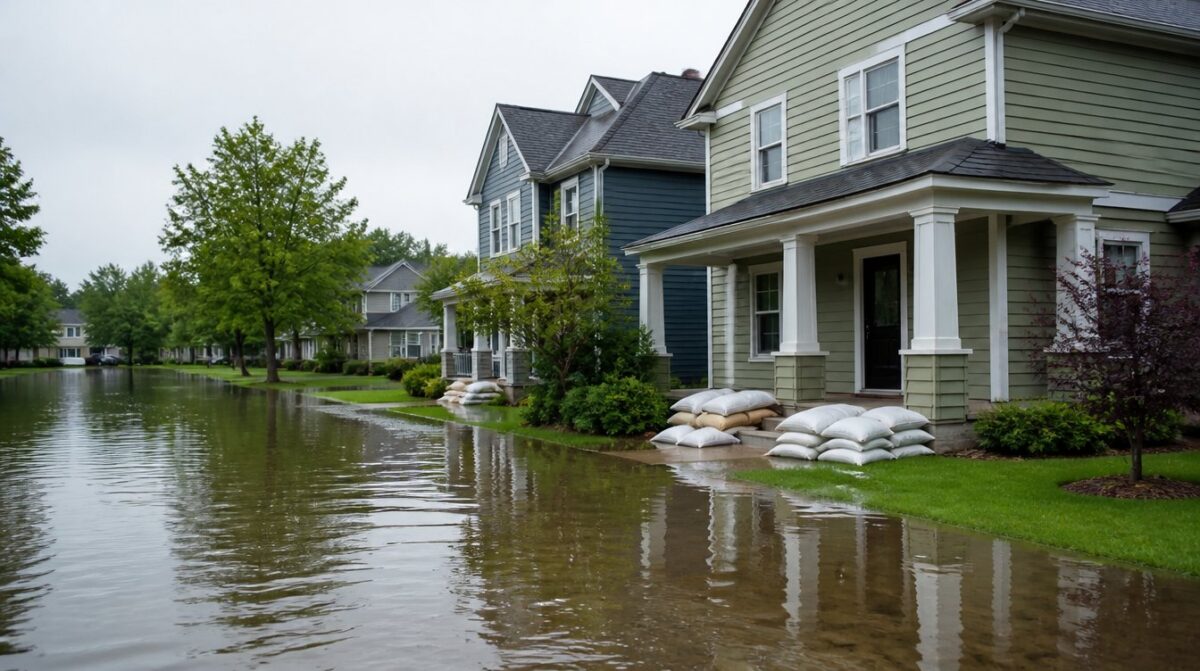
Most homeowners find out their policy excludes flood damage at the worst possible time, when water is already in the living room. Standard homeowners insurance pays for wind, fire, theft and many kinds of water damage, but rising water from outside the home is a separate risk with its own policy. This guide explains how flood insurance works, what the federal program pays for and what it leaves out, how pricing and waiting periods work, and when a private or excess policy makes sense.
What flood insurance is and why homeowners policies skip it
Flood insurance covers physical damage caused directly by flooding. FEMA’s own guidance is blunt on the point: only flood insurance covers flood damage. A homeowners or renters policy typically does not.
Under the National Flood Insurance Program (NFIP), a flood generally means an excess of water on normally dry land, including overflowing rivers and lakes, heavy rain that cannot drain, storm surge, mudflow and coastal erosion. A burst pipe inside your house is a different claim, and your homeowners policy handles it. The dividing line is where the water came from.
FEMA runs the NFIP and sells policies through nearly 90 private insurance companies, so you can buy a federal policy from an agent without dealing with the government directly. Communities must adopt and enforce floodplain rules to take part. Private insurers also sell their own flood policies, which we compare below.
If you are still choosing a carrier for your main home policy, our guide to the best homeowners insurance companies is a good place to start. Flood coverage sits next to that policy, not inside it.
Who actually needs it
Lenders generally require flood insurance when a home with a federally backed or regulated mortgage sits in a high-risk flood zone, known as a Special Flood Hazard Area. If you own the home outright or live outside those zones, nobody will make you buy it. Many flooded homes turn out to be uninsured for this reason.
A map zone describes statistical risk and says little about your specific lot. Low-lying lots, homes near creeks or storm drains, areas downstream of dams, and neighborhoods with a lot of pavement can take on water even when the map shows moderate or low risk. Premiums outside high-risk zones are often lower, which makes the coverage cheaper to carry than it is to go without after a loss.
A quick self-check helps:
- Has water ever entered your home, garage or yard in heavy storms?
- Is there a river, creek, lake, canal or drainage ditch nearby?
- Is your lot lower than the street or neighboring properties?
- Do you live in a hurricane or snowmelt region?
- Could you pay for gutting and rebuilding the ground floor out of savings?
Two or more yes answers is a good reason to get a quote before deciding.
What NFIP flood insurance covers
The standard NFIP policy for a one to four family home (the Dwelling Form) has two parts, and each is bought separately with its own deductible.
- Building coverage: up to $250,000 for a single-family home.
- Contents coverage: up to $100,000 for personal belongings. Renters can buy contents coverage alone, up to the same $100,000.
Non-residential buildings can carry up to $500,000 for the building and $500,000 for contents. Condo owners and landlords use different forms, so ask the agent which one applies to you.
Building coverage typically includes
- The structure and its foundation, plus electrical and plumbing systems
- Furnaces, water heaters, central air conditioning, heat pumps and sump pumps
- Built-in appliances such as refrigerators, stoves and dishwashers
- Permanently installed carpeting over an unfinished floor, cabinets, paneling and window blinds
- Detached garages, up to 10 percent of your building coverage
- Debris removal
Contents coverage typically includes
- Clothing, furniture and electronics
- Curtains, portable and window air conditioners, portable microwaves and dishwashers
- Washers, dryers, and food freezers with the food in them
- Certain valuables such as original artwork and furs, up to $2,500
What flood insurance does not pay for
- Cars and most other self-propelled vehicles (comprehensive auto coverage handles those)
- Landscaping, trees, septic systems, decks, patios, fences, seawalls, hot tubs and swimming pools
- Temporary housing and other living expenses while you are displaced
- Business interruption and loss of use
- Cash, precious metals and valuable papers such as stock certificates
- Mold or mildew damage that you could have avoided
- Detached buildings other than garages, unless you buy a separate building policy for them
The missing living expense coverage surprises many people. If your home is unlivable for four months, the NFIP does not pay for the hotel or rental. Some private policies add loss of use, which is one of the real reasons to compare.
Sewer backup deserves a note. The NFIP pays for it only when the backup is a direct result of flooding. If the backup has another cause, it is not covered under flood insurance, and you would look to an endorsement on your homeowners policy instead.
Basements: the biggest surprise in the fine print
FEMA defines a basement as any area of the building, including a sunken room, whose floor is below ground level on all sides. Coverage there is limited regardless of flood zone or construction date. Crawlspaces and enclosed areas below an elevated floor face similar limits depending on zone.
In practice, a basement is covered for the equipment that keeps the house running: furnace, water heater, central air, sump pump, electrical panel, and washers, dryers and freezers (these fall under contents). Basement drywall and nonflammable insulation get limited coverage. What you generally cannot recover is the finished space people build down there: carpet and floor coverings, paneling, paint-and-trim upgrades, and most furniture, electronics and stored belongings.
If you have a finished basement with a home theater, a bedroom or a home office, expect the policy to pay far less than the room cost to build. A private policy may handle basements more generously, but that varies by insurer, so ask for the wording before you buy. Moving valuables upstairs is the cheapest protection available.
How claims are valued: replacement cost vs actual cash value
This detail changes the size of a check more than almost anything else.
- Replacement cost value (RCV): pays to replace the damaged part of the building without subtracting depreciation. To qualify, the home must be a single-family dwelling, it must be your principal residence (you live there at least 80 percent of the year), and your building coverage must be at least 80 percent of the full replacement cost or the maximum available under the NFIP.
- Actual cash value (ACV): replacement cost minus depreciation. It applies to homes that do not meet the RCV rules, and some items, like wall-to-wall carpeting, are always paid at ACV.
- Contents: always paid at ACV. A ten-year-old couch is paid at what a ten-year-old couch is worth, not the price of a new one.
The $250,000 limit is a ceiling. If rebuilding your home would cost $400,000, the NFIP will not pay the difference. That gap is what excess flood insurance is for.
Increased Cost of Compliance (ICC) coverage
If a flood damages your home badly enough, your community may require you to bring it up to current floodplain standards before you rebuild. That can mean elevating the house, demolishing it or relocating it. Most NFIP policies include Increased Cost of Compliance coverage that pays up to $30,000 toward that work.
FEMA lists the conditions: the building is in a Special Flood Hazard Area, it was substantially or repeatedly damaged (repair cost of 50 percent or more of the pre-flood market value), and your community requires the upgrade. ICC is paid on top of the regular damage payment, but your building claim and ICC claim together cannot exceed the building limit, which is $250,000 for a single-family home. Your contents claim is paid separately.
The 30-day waiting period and its exceptions
Most NFIP policies take effect 30 days after purchase. A flood that begins before the policy is active is not covered, even if the damage shows up after the policy starts. Buying coverage when a storm is already in the forecast is usually too late.
FEMA lists these exceptions:
- No wait when the policy is bought in connection with making, increasing, extending or renewing a mortgage loan.
- No wait when you add coverage at the renewal of an existing policy.
- One day for a building newly placed in a high-risk zone when the policy is bought within 13 months of a flood map revision.
- Possible waiver for flooding on burned federal land caused or worsened by post-wildfire conditions, if the policy is bought no later than 60 days after the fire is contained. Eligibility is decided case by case.
Private insurers often advertise shorter waits, commonly in the range of 10 to 15 days, and a few have none. Confirm the exact start date in writing.
How flood insurance pricing works
NFIP pricing uses a method called Risk Rating 2.0. FEMA phased it in for new policies on October 1, 2021, for renewals starting April 1, 2022, and fully by April 1, 2023. Instead of relying mostly on flood zone, it looks at the individual property:
- How often flooding happens in the area
- Multiple flood types, including river overflow, storm surge, coastal erosion and heavy rainfall
- Distance to the nearest water source
- Elevation
- The cost to rebuild the home
Under existing statutory limits, most rates cannot rise more than 18 percent per year, which means a premium that is moving toward its full risk-based price can climb for several years in a row. Expect your first quote to change over time.
Rather than quote an average that varies a lot by state, city and elevation, we suggest getting an actual quote for your address. Other factors that move the price include your deductible (a higher deductible lowers the premium but also lowers your claim payment), how much coverage you choose, and whether you buy contents coverage.
Bundling can help with other lines of coverage, so see our article on bundling auto and home insurance.
NFIP vs private flood vs excess flood
| Feature | NFIP | Private flood | Excess flood |
|---|---|---|---|
| Who backs it | FEMA, sold through participating insurers | Private insurer | Private insurer, sits on top of a primary policy |
| Home building limit | $250,000 | Can be higher, varies by insurer | Extra limit above the primary policy |
| Contents limit | $100,000 | Can be higher, varies by insurer | Depends on the policy |
| Typical waiting period | 30 days, with exceptions | Often shorter, sometimes none | Varies |
| Loss of use | Not covered | Sometimes offered | Varies |
| Basement terms | Limited by policy form | Varies, read the wording | Often follows the primary policy |
| Availability | Participating communities | Varies by state and location | Varies |
| Best for | Most homes, lender requirements, a baseline policy | Higher-value homes or those wanting broader terms | Homes whose rebuild cost exceeds $250,000 |
Lenders can accept private flood policies if they meet federal requirements, so check with your lender before you cancel or switch an NFIP policy. Private carriers may also decline high-risk homes or place restrictions that the NFIP does not. Compare terms line by line as well as price.
How flood coverage fits with the rest of your insurance
- Homeowners: covers wind, hail, fire and many water losses from inside the home. It excludes flood. Older properties may have additional issues, which we cover in homeowners insurance for older homes.
- Auto: comprehensive coverage handles flood-damaged vehicles.
- Renters: a renter’s policy typically excludes flood, but an NFIP contents-only policy can cover your belongings.
- Umbrella: protects against liability claims and does not pay your own flood losses. See umbrella insurance explained for how that works.
Common mistakes to avoid
- Waiting for a storm warning. The 30-day wait means last-minute purchases may not pay.
- Assuming homeowners insurance covers it. It does not, and a denied claim is a hard way to learn that.
- Skipping contents coverage. Building coverage does not pay for your furniture and electronics.
- Counting on the basement. Finished-basement upgrades and stored belongings are largely excluded.
- Ignoring the rebuild gap. If rebuilding costs more than $250,000, consider excess coverage.
- Forgetting living expenses. The NFIP does not pay for temporary housing, so keep emergency savings or compare private policies that include it.
- Choosing only by price. Compare limits, valuation (ACV or RCV), basement terms and the waiting period.
- Not documenting belongings. Photograph or video each room and store the files off site.
Checklist before you buy
- Look up your flood zone and ask what the elevation certificate could do for your price.
- Estimate your rebuild cost and compare it to the $250,000 NFIP limit.
- Decide on a building deductible and a contents deductible.
- Get at least one NFIP quote and one private quote.
- Ask whether your home qualifies for replacement cost value.
- Read the basement and loss-of-use wording.
- Confirm the policy start date in writing.
- Check with your mortgage lender about requirements.
- Store receipts, photos and a home inventory somewhere safe.
None of this replaces advice from a licensed agent who knows your property. Policy terms and rates differ by address, carrier and policy form.
Frequently asked questions
Does homeowners insurance cover flooding?
No. Standard homeowners and renters policies typically exclude flood damage. FEMA says only flood insurance covers flood damage, so you need a separate policy.
How much coverage does an NFIP flood policy offer?
For a single-family home, the NFIP offers up to $250,000 for the building and up to $100,000 for personal belongings. Building and contents are bought separately, each with its own deductible.
How long is the waiting period for flood insurance?
Most NFIP policies take effect after 30 days. There is no wait when coverage is bought with a mortgage loan or added at renewal, and a one-day wait applies in some newly mapped high-risk situations. Private policies often have shorter waits.
Is a basement covered by flood insurance?
Only in a limited way. The NFIP covers items such as the furnace, water heater, sump pump and electrical system, along with washers, dryers and freezers. Finished upgrades such as flooring and most stored belongings are generally not covered.
What is Increased Cost of Compliance coverage?
ICC is included in most NFIP policies and pays up to $30,000 toward elevating, demolishing or relocating a home that is substantially or repeatedly damaged by flood and must meet current local standards. It counts toward the building limit.
Do I need flood insurance if I am not in a high-risk zone?
Not by lender rule, but it can still make sense. Homes outside high-risk zones can flood, and premiums are often lower there. Getting a quote lets you compare the cost against the risk.
What is the difference between NFIP and private flood insurance?
The NFIP is backed by FEMA with set limits and terms. Private policies may offer higher limits, shorter waits or extras such as loss of use, but terms vary by insurer, and your lender must accept the policy if you have a mortgage.
Does flood insurance pay for a hotel while my home is repaired?
The NFIP does not pay for temporary housing or other living expenses. Some private flood policies include loss of use, so check the wording if that protection matters to you.