
Classic Car Insurance: Agreed Value, Costs and Top Insurers

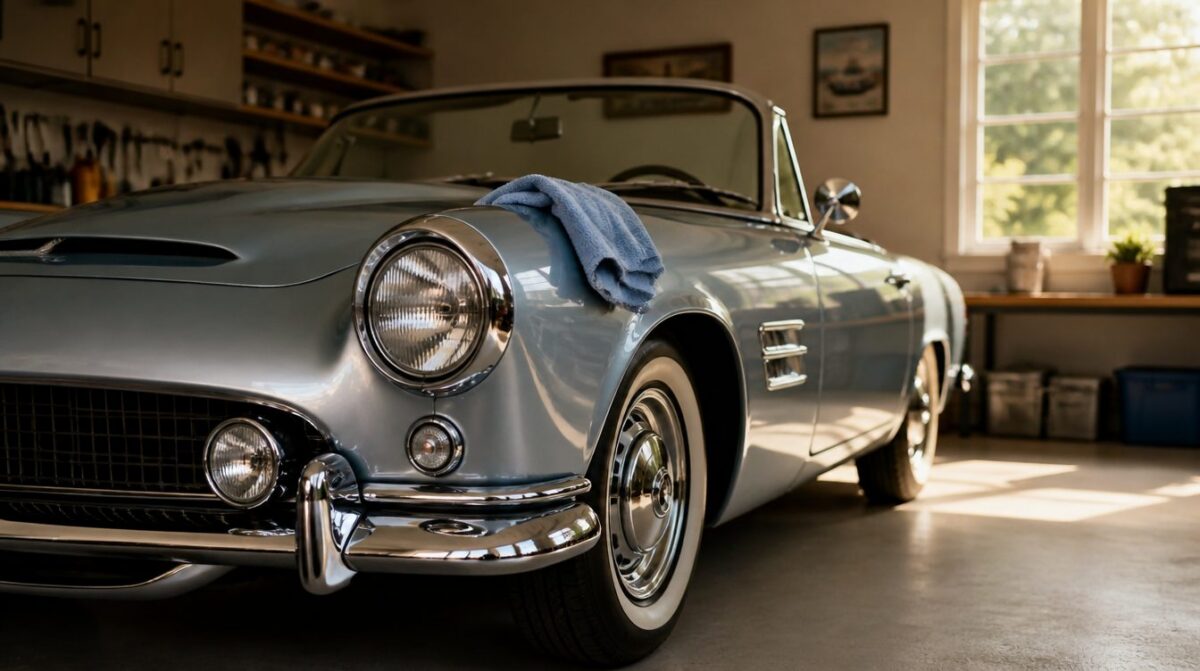
Classic car insurance is a specialty policy for older or collectible vehicles that are driven occasionally and kept in good care. Its main difference from a standard auto policy is how it pays after a total loss. A regular policy pays what the car was worth on the day of the accident, minus depreciation. A classic policy usually pays a value you and the insurer settled on beforehand. For a car whose market value may be climbing, that gap matters more than almost any other term in the contract.
This guide covers which cars qualify, how agreed value, stated value and actual cash value differ, what mileage and storage rules to expect, and which extras are worth having. It also compares what Hagerty, Grundy, American Collectors, Progressive and State Farm say on their own pages as of November 2026. Policy terms change and vary by state, so confirm details with the insurer. This article is general information, not insurance advice, and it contains no affiliate links.
The quick answer
- Who it is for: owners of classic, antique, collectible or limited-production vehicles that are not their everyday transportation.
- The main benefit: an agreed (or guaranteed) value, paid on a covered total loss without depreciation, minus the deductible.
- The main trade-off: usage and storage rules. Every insurer in this guide that states a rule excludes daily driving.
- Age is not the whole test. Insurers describe classics as 25 years or older (Grundy, Progressive, Hagerty’s general definition), while State Farm uses 10 to 24 years for classic and over 24 for antique. Condition and collectibility count too.
- Cost: insurers say these policies tend to cost less than standard coverage because the cars are driven less. None of the pages we read published a premium, and we will not invent one.
- Get a written valuation. Photos, receipts and an appraisal are what support the agreed number.
What classic car insurance is
Classic car insurance (also called collector car insurance) is built around vehicles that are enjoyed rather than commuted in. Insurers underwrite them on the assumption that they are garaged, maintained, and used for shows, club activities, parades and occasional pleasure drives. In return, the policy treats the car as an asset with its own value instead of a depreciating used car.
Standard coverages still apply. Liability, collision and comprehensive exist in classic policies as in any other. Grundy, for example, lists medical payments and liability limits of $500,000 and up. What changes is the valuation, the claims handling, and extras tailored to older cars, such as spare parts coverage and coverage while a restoration is underway.
A classic policy does not replace the coverage on your daily vehicle. Progressive’s page says that a classic cannot be your everyday car and that you need a separate policy on your regular-use vehicle, which does not have to be with Progressive. American Collectors similarly asks for one regular-use vehicle per licensed driver in the household, with limited exceptions. If you are unsure how your primary policy is structured, our guide to full coverage vs. liability-only auto insurance is a useful refresher.
Which cars qualify
There is no single legal or industry definition. Progressive notes that classics are often 25 to 50 years old, that there is no definitive age, and that states define classics differently by age, weight, usage or manufacturing. Hagerty’s guide describes a vintage car as built from 1919 to 1939 and mostly unmodified, and an antique as generally built before 1919.
| Category | Typical description | Source / note |
|---|---|---|
| Classic | Often 25 years or older; some insurers start at 10 years | Grundy: 25+ years. State Farm: 10 to 24 years with historical interest |
| Antique | Generally older still; Hagerty says before 1919 | State Farm: over 24 years with historic interest |
| Vintage | Built 1919 to 1939 and mostly unmodified | Hagerty’s definition |
| Street rod / custom | Modified older vehicles | Grundy lists street rods and customs; American Collectors lists customs, street rods and replicas |
| Limited-production / exotic | Rare or low-volume vehicles | Grundy lists limited production (exotic) vehicles |
| Newer collectibles | Younger cars that hold collector interest | Hagerty has a separate product for 1980 and newer collectibles |
Beyond age, insurers look at four things.
- Usage. Occasional pleasure driving, shows, tours and club events are fine. Commuting to work or school and routine shopping are not. Hagerty says this is its main requirement.
- Storage. American Collectors asks for an enclosed, locked garage, with alternate garaging possible on request. State Farm says an enclosed building. Progressive says an enclosed structure is preferred and a carport or driveway may be acceptable.
- Condition. American Collectors and State Farm both want vehicles that are restored, preserved or being restored. State Farm says some insurers may decline a car that is not in excellent condition.
- Driving record. American Collectors asks for at least 5 years of licensed driving and a limited recent history of violations. Progressive says serious infractions in the last three years may disqualify you in many states, and Grundy’s daily-driver program asks for no major violations in three years.
A modified car can still qualify with some insurers, but keep documentation of every change. Unreported upgrades can cause disputes at claim time.
Agreed value vs. stated value vs. actual cash value
This is the section that decides how much you collect after a total loss, so it is worth reading slowly.
| Type | How the payout is set | Watch for |
|---|---|---|
| Actual cash value (ACV) | The car’s value on the day of the loss, before damage. Standard policies use this. | Depreciation and market guides may put an older car below what you spent on it |
| Stated value | An amount you declare when the policy starts, supported by documentation. Hagerty says the insurer may pay the stated value or ACV, whichever is less. | The stated number acts as a ceiling, not a promise |
| Agreed value | A value you and the insurer settle on from appraisals, photos or records. Paid on a covered total loss. | Deductible is subtracted; conditions apply, such as no removed parts or deterioration |
Hagerty calls its version Guaranteed Value, and says payouts are not depreciated and include sales taxes, with fees included unless state law prohibits it. State Farm says that because these cars have no book value, a value must be agreed to for the policy, and that higher agreed values mean more coverage and a higher premium. Its agreed value applies if there is no other damage, parts have not been removed, and the car has not deteriorated from abuse or neglect. State Farm adds that this does not apply in Massachusetts and North Carolina.
Two practical points follow. First, an agreed value only protects you if it is current. Hagerty advises reviewing the value at every renewal and adjusting for market changes or restoration spending. Second, setting it too low leaves you underinsured, while setting it too high costs more in premium than needed, as State Farm’s valuation guide warns.
Mileage plans and usage limits
Mileage rules differ more than most people expect, and the pages we read do not agree with each other.
- Grundy says it has no mileage restrictions on collector vehicles.
- Progressive, through its Hagerty-backed classic program, says there are no fixed mileage restrictions, and describes flexible usage for club functions, exhibitions, tours and occasional pleasure driving.
- Hagerty says mileage is part of eligibility and varies by vehicle type. It says 3,500 miles or fewer per year is typical for collectible vehicles and that up to 7,500 miles may be considered.
- American Collectors offers Annual Tailored Mileage Plans, letting you match coverage to how much you drive. It does not state specific limits on that page.
If you plan to drive the car regularly, ask for the mileage terms in writing. A daily-driver-style policy for the same car may cost more, as Hagerty points out. If the car is a regular driver, you may be better off with a standard policy or a usage-based option, and our guide to pay-per-mile car insurance explains how that works.
Coverages worth having
- Spare parts. Grundy lists $500 of automatic coverage for spare parts specific to your collector vehicle, and State Farm offers up to $500 for spare parts. American Collectors lists spare parts as included, without amounts. Check the limit if you keep a stash of hard-to-find parts.
- Towing and breakdown help. Grundy lists flatbed towing and breakdown assistance, and trip interruption of up to $600 if the car breaks down more than 50 miles from home. American Collectors includes basic towing within TreasureGuard and offers C.A.R.E. plans for towing and transportation. Progressive says Hagerty Drivers Club members get 24/7 roadside assistance, and that membership is not required to buy insurance.
- Restoration coverage. American Collectors says it will protect the car throughout an active restoration. State Farm offers Under Construction coverage. Hagerty’s Vehicle Under Construction raises the guaranteed value by 10% per quarter, up to a $25,000 increase, and covers $750 of automotive tools.
- Salvage options. Hagerty’s Cherished Salvage lets you keep the vehicle and still receive the full guaranteed value after a covered total loss. It is not available in New York.
- Shows and events. Grundy lists coverage during transportation to and participation in car shows. Hagerty’s Motorsports Advantage covers safety equipment, extra tools, spare parts and debris removal for on-track use. Racing and timed events are excluded under American Collectors’ standard eligibility.
- Choice of repair shop. American Collectors lists this as part of TreasureGuard. Hagerty says claims can be handled at a shop of your choice.
- Newly acquired cars. American Collectors gives up to 30 days of automatic coverage for qualified vehicles, up to $100,000.
Classic car insurers compared
The table uses only what each insurer’s current page stated when we read it in November 2026. A dash means the page did not say. We left GEICO out because the page we could access did not describe its classic program, and we did not want to guess. Progressive’s classic coverage is referred to Hagerty and placed with insurers that are not affiliated with Progressive, according to Progressive’s page, so the two share a program.
| Insurer | Eligibility notes | Usage and storage | Value | Mileage | Extras listed |
|---|---|---|---|---|---|
| Hagerty | No age cutoff on the page; daily driving excluded | Pleasure use; storage not stated | Guaranteed Value, no depreciation, taxes included | Typically 3,500 miles or fewer a year, up to 7,500 may be considered | Cherished Salvage, Vehicle Under Construction, Motorsports Advantage |
| Grundy | Classics 25+ years, street rods, exotics, display vehicles; separate daily-driver program | Club activities, shows, parades, pleasure driving; secure storage for its daily-driver program | Agreed value, no depreciation | No restrictions | $500 spare parts, flatbed towing, trip interruption up to $600 |
| American Collectors | Collector merit; 5+ years licensed; limited recent violations | Not daily driven; enclosed, locked garage | Agreed value, minus deductible | Tailored mileage plans | Restoration, basic towing, repair shop of choice, Inflation Guard |
| Progressive (Hagerty program) | Often 25 to 50 years; no definitive age | Not daily driven; enclosed structure preferred, carport or driveway may be acceptable | Guaranteed Value | No fixed restrictions | Parts sourcing, optional Hagerty Drivers Club roadside |
| State Farm | Classic 10 to 24 years, antique over 24; historic interest | Very limited use; enclosed building | Agreed value, with conditions | — | Up to $500 spare parts, Under Construction coverage |
Availability varies. State Farm says its Classic+ product, built with Hagerty, is offered in all states except CA, KY, MA, MI, NC, NJ, NY, PA and WV. Grundy lists 50 states covered, and American Collectors says it covers collectors in all 50 states. Both Grundy and American Collectors are single-source claims from their own pages.
How classic car insurance compares with standard insurance
The tradeoff is simple to state. You accept limits on how you use the car, and in return you get a defined payout and coverage written for old vehicles. Standard auto insurance generally gives you actual cash value and little recognition of rare parts or restoration spending.
| Feature | Standard auto policy | Classic car policy |
|---|---|---|
| Total loss payout | Usually actual cash value | Agreed or guaranteed value, minus deductible |
| Daily driving | Allowed | Not allowed |
| Mileage | Rated by how much you drive | Varies from none to a set annual range |
| Storage | Not usually required | Often an enclosed or locked garage |
| Parts and restoration | Generally not addressed | Spare parts, restoration and under-construction coverage |
| Claims handling | Standard repair network | Often shop of your choice and parts sourcing |
What affects the price
Progressive and Hagerty both say classic policies cost less than standard ones because the cars are driven less. Progressive describes the price difference as significant but gives no figure, and other pages give conflicting percentages, so we do not repeat them. These factors move the premium:
- The agreed value. State Farm says a higher agreed value means more coverage and a higher premium.
- The car. Age, condition, type, and whether it is a kit car or a high-value vehicle.
- Usage and mileage. A policy that treats the car as a daily driver can cost more.
- Storage security. American Collectors lists garage security among its discounts.
- Driver history and experience. Violations and accidents affect eligibility and rates. If your record is rough, see our guide to car insurance for bad credit for how insurers weigh that.
- Deductible. Grundy says a zero deductible is optional.
- Number of vehicles. Progressive lists a multi-vehicle discount for two or more classics. American Collectors lists multi-vehicle policies too.
The only reliable way to know your cost is to get quotes from at least three insurers using the same value, mileage and deductible.
How to get an appraisal or valuation
State Farm’s valuation guide and Hagerty’s value explainer point to the same set of steps.
- Pull real sales, not asking prices. Look at auction results, collector marketplaces and dealer listings for cars matching your year, make, model and condition.
- Check online valuation tools built for classic cars. They give a ballpark by condition, and values move with the market.
- Hire a specialist appraiser for rare, modified or high-value cars. An appraiser assesses condition, originality, restoration work and demand. The report is useful evidence for an agreed value.
- Document everything. Keep receipts for parts and restoration, current photos from several angles, records of original features, and ownership history.
- Update after restoration and at renewal. A new appraisal after major work keeps the agreed value in line with what you have invested.
How to choose a classic car insurer
- Confirm how the value works. Ask whether the policy is agreed or guaranteed value or only stated value, and read the conditions.
- Match the usage rules to your habits. If you drive more than the plan allows, a claim can be disputed.
- Check storage requirements before you apply, especially if you keep the car in a carport or shared lot.
- Look at the extras that matter to your car: spare parts limits, towing distance, restoration coverage, and whether you can use your own shop.
- Ask about total-loss options. Salvage retention and cash settlement features vary.
- Check availability in your state. Some products are limited or modified by state.
- Ask who actually underwrites the policy. Progressive’s page states that the coverage is placed with insurers not affiliated with Progressive.
- Compare the same terms. Quote identical values, deductibles and mileage so the numbers line up.
If you do not own the vehicle you drive, that is a different problem. See non-owner car insurance for coverage options in that situation. Motorbike collectors can read our motorcycle insurance guide, since many of the same value questions apply.
Mistakes to avoid
- Insuring a collectible on a standard policy and discovering the payout is actual cash value.
- Choosing stated value without realizing the payout can be capped at the lower ACV.
- Setting an agreed value from memory or a single online estimate.
- Letting the value go stale after a restoration or a market jump.
- Using the car for commuting and assuming it is covered. Insurers exclude daily driving.
- Skipping a policy on your regular vehicle. Insurers expect one.
- Not disclosing modifications or removed original parts. State Farm says its agreed value applies only if parts have not been removed.
- Ignoring storage rules, then filing a theft or fire claim.
- Assuming race or track use is covered. American Collectors excludes racing and timed events, and Hagerty sells track coverage as a separate option.
- Buying on price alone without comparing mileage and extras.
Frequently asked questions
What is classic car insurance?
Classic car insurance is a specialty policy for older or collectible vehicles that are not used as daily drivers. It usually pays an agreed or guaranteed value on a total loss instead of depreciated actual cash value, and it can add coverage for spare parts, restoration and shows.
How old does a car have to be to qualify as a classic?
There is no single rule. Grundy covers classics 25 years or older, State Farm uses 10 to 24 years for classic and over 24 for antique, and Progressive says classics are often 25 to 50 years old but there is no definitive age. Condition, usage and collectibility also matter.
What is agreed value on a classic car policy?
Agreed value is an amount you and the insurer settle on when the policy starts. If the car is a covered total loss, the insurer pays that amount, minus your deductible, without depreciation. Hagerty calls its version Guaranteed Value.
What is the difference between agreed value and stated value?
With agreed value, the insurer accepts your documented number up front and pays it. With stated value, Hagerty says the insurer may pay the stated value or the actual cash value, whichever is less, so the stated number is only a ceiling.
Can I drive a classic car every day?
No. Hagerty, Progressive, State Farm and American Collectors all exclude daily driving. Occasional pleasure drives, shows, tours and club events are allowed. Commuting to work or school is generally not.
Is there a mileage limit on classic car insurance?
It depends on the insurer. Grundy says no mileage restrictions, and Progressive says no fixed restrictions. Hagerty says 3,500 miles or fewer a year is typical and up to 7,500 may be considered. American Collectors offers tailored mileage plans.
Is classic car insurance cheaper than regular car insurance?
Insurers say it often is because the cars are driven less, but the pages we read gave no premium figures and other sources conflict on percentages. Your price depends on the agreed value, car, usage, storage, driver history and deductible. Compare quotes.
Do I need a garage for classic car insurance?
Often yes. American Collectors asks for an enclosed, locked garage, and State Farm says an enclosed building. Progressive says enclosed storage is preferred and a carport or driveway may be acceptable. Check your insurer’s rule.
Do I need an appraisal to insure a classic car?
Not always, but documentation supports the agreed value. State Farm suggests a professional appraisal for rare or unique cars, plus recent sales, receipts and photos. A new appraisal after restoration helps keep the value current.
Does classic car insurance cover a restoration project?
Some policies do. American Collectors says it protects the car throughout an active restoration, State Farm offers Under Construction coverage, and Hagerty offers Vehicle Under Construction coverage that raises the guaranteed value by 10% per quarter up to $25,000.
Sources and a note on terms
Insurer terms come from their own pages, read in November 2026: Hagerty, Grundy, American Collectors, Progressive and State Farm. Value definitions come from Hagerty and State Farm. Eligibility, discounts and availability change and vary by state, so verify with the insurer or a licensed agent before you buy. Your state insurance department can answer questions about licensing and complaints.